Particle size distribution testing is warranted whenever particle-dependent properties influence performance, processing Particle Size Analyzer, compliance, or safety. Run PSD during raw material qualification, supplier changes, formulation work (excipient selection, API milling, blending), scale-up, and after equipment or process modifications. Include in-process checks, incoming material release, periodic surveillance, and post-complaint or failure investigations. Use risk-based sampling and orthogonal methods to verify impact on dissolution, flow, stability, and bioavailability. Continue for targeted guidance and practical checklists.
Quick Decision Rule: When to Run PSD Tests (Particle Size Distribution at a Glance)
A concise rule of thumb guides whether to perform particle size distribution (PSD) testing: run PSD when particle-dependent properties—flowability, dissolution rate, packing density, or surface area—directly affect product performance, processing efficiency, regulatory compliance, or safety.
The decision rule prioritizes scenarios where variability alters outcomes: new raw materials, supplier changes, scale-up Lab Alliance, batch failures, or complaints. Routine audits and critical quality attributes trigger periodic checks.
For exploratory or low-risk projects, sampling may be minimal; for high-impact products, implement defined acceptance criteria and frequency. Rapid, targeted testing supports iterative decisions without bureaucratic delay.
Documentation should be proportionate, clear, and accessible, enabling teams to act autonomously while preserving traceability. This pragmatic framework balances control with operational freedom.
Particle Size Distribution Testing During Formulation Development
Building on the decision rule for when to run PSD tests, formulation development requires more frequent and targeted particle size analysis to link material attributes to product performance. The team monitors particle size during excipient selection, API milling, and blend optimization to guarantee consistent dissolution, stability, and bioavailability.
Sampling plans focus on critical stages and comparative studies across candidate formulas. Results guide choices without constraining creative approaches, supporting flexible formulation pathways that preserve desired product attributes.
- Screen APIs and excipients for compatible size distributions
- Track size shifts after wetting, granulation, or coating steps
- Compare candidate formulations to target PSD profiles
- Use size data to prioritize scalable, robust options
- Document PSD-driven decisions for regulatory clarity
Process or Equipment Changes That Require PSD Testing
When should particle size distribution testing be triggered after changes to manufacturing equipment or processes? The guidance recommends PSD testing whenever modifications could alter particle characteristics: new milling or granulation equipment, altered impeller speeds, revised feed rates, different nozzle geometries, or changes in drying profiles.
Validation runs and scale-up batches merit PSD assessment to confirm equivalence with prior performance. The approach emphasizes documenting change rationale, defining acceptance criteria, and sampling representative points.
Temporary adjustments for troubleshooting or process optimization should include targeted PSD checks to avoid drift. Equipment maintenance with component replacement that affects shear or residence time also triggers testing.
Testing guarantees product performance freedom by verifying that alterations do not compromise dissolution, flow, stability, or bioavailability.
Routine QA, Supplier, and Regulatory PSD Testing Triggers
Three primary contexts prompt routine particle size distribution (PSD) testing in quality assurance: in-process control during production runs, incoming raw material qualification from suppliers, and regulatory compliance sampling.
The discussion outlines when testing is initiated, emphasizing autonomy, clear acceptance criteria, and predictable action levels. Routine PSD ensures process stability, vendor accountability, and audit readiness without micromanagement.
- Scheduled in-process checkpoints tied to critical process parameters
- Incoming lots tested against supplier specifications before release
- Periodic surveillance batches to satisfy regulatory dossiers
- Lot-to-lot trending for supplier performance and change detection
- Random sampling for post-change verification or market complaints
Testing triggers are defined by risk, contractual terms, and regulatory expectations, allowing teams freedom to optimize cadence while maintaining product integrity.
Troubleshoot Failures and a Practical PSD Checklist (Who, Frequency, Methods)
Having established triggers and cadence for routine PSD testing, the next focus is systematic troubleshooting and a compact checklist specifying responsibility, sampling frequency, and methods.
When deviations occur, a defined escalation path assigns roles: operator performs immediate re-sample, QC analyst runs orthogonal method, and process engineer evaluates root cause.
Frequency adapts to risk: daily checks for critical batches, weekly for stable runs, and event-driven testing after changes or excursions.
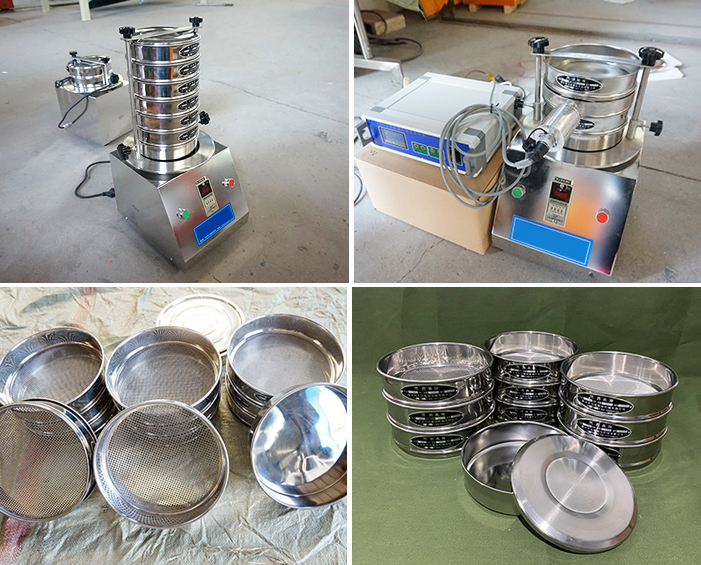
Methods prioritize fit-for-purpose techniques: laser diffraction for span and D10–D90, sieve or microscopy for coarse fractions, and wet dispersion when agglomeration is suspected.
Documentation templates, acceptance criteria, and corrective actions close the loop.
This terse, empowering approach preserves autonomy while ensuring reproducible resolution and continuous improvement.
Conclusion
Particle size distribution testing should be performed whenever particle characteristics could influence product performance, stability, or processability. During formulation development it guides design decisions; after process or equipment changes it verifies consistency; routinely for quality assurance, supplier qualification, and regulatory compliance; and immediately when troubleshooting failures or unexpected variation. A concise, role-specific checklist defining who tests, how often, and which methods to use guarantees timely, actionable PSD data that protects product quality and manufacturing robustness.
